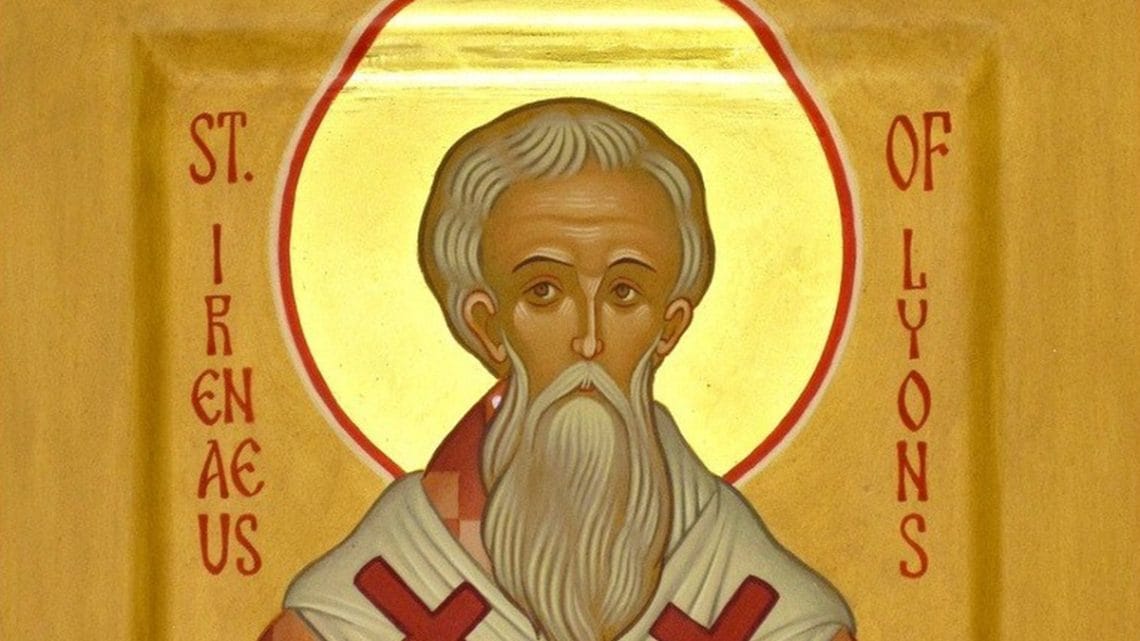
"As Irenaeus has just insisted, at the end of the preface, faith is established upon what is truly real, and as such, we are to 'believe what really is, as it is,' so that 'believing what really is, as it is, we may always keep our conviction of it firm.' (chp 3). This insistence that we must see, and accept, what is, as it is, recurs frequently in Against the Heresies, where he specifies that it concerns the truth both about God and man: he explains that we must 'know what God can do and what benefits man can receive, so that we might never wander from the true comprehension of things, as they are, both regarding God and man.'"—John Behr, Introduction to On the Apostolic Preaching by St. Irenaeus of Lyons, p. 18
That St. Irenaeus' theological vision, along with that of the entire Catholic Church, is premised on the fact that truth exists and that Christianity is the ultimate description of reality, is something that is unfortunately not as well appreciated as it should be. In the face of attacks from all sides, be they scientific, philosophical, historical, or political, Catholics can too easily forget that the Church is the pillar and foundation of the truth. Theology, as Hans Urs von Balthasar notes in the footnote accompanying this quote, is about seeing what is. Catholicism is the worldview that most fully explains the things that we see, touch, smell, taste, and feel with our own hands.
This should be something that is extremely reassuring to us. The Christian religion is not merely one set of cultural, ritual, or spiritual practices among many—it is the highest, fullest, and most accurate way of living in created reality. Not all systems of thought and practice are equal. Truth exists, and Catholics are blessed to be members of the divine institution that embodies that truth fully. Given these facts, we should strive to live, think, and act in accord with what the Church authoritatively stewards and teaches. Not merely from a sense of duty, but out of an understanding that these diverse teachings the Church proclaims are actually true.